Restrictive Design Challenge Report
Benchmark Part Design
Limitations of the Design and Manufacturing Process:
DfAM Restrictions Evaluated-
Minimum Assembly Clearance (0.24 inch to 0.38 inch, evaluated using a 0.30 inch pin)
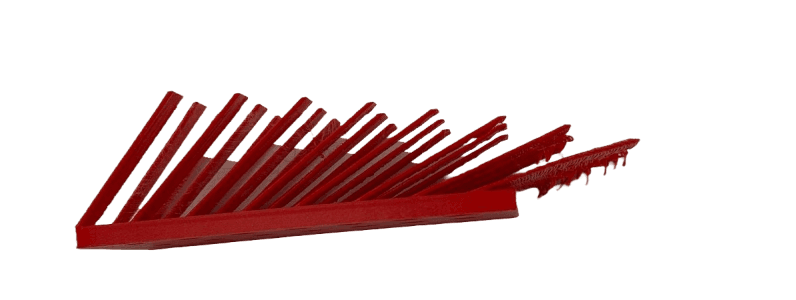
Self-Supporting Angle (50°, 45°, 40°, 35°, 30°, 25°, 20°, 15°)
Pass/Fail Criteria
Minimum Assembly Clearance: The first hole from low to high which fits 0.30 inch pin fits without force, the clearance is marked as Pass. Otherwise, it is marked as Fail.
Self-Supporting Angle: Evaluated by inspecting the print quality. If the angle maintained structural integrity without drooping, collapsing or curling, it is marked as Pass. This was measured by the length of the angle (which were supposed to be 1.5 inches), the width of the angle at the top and visual look.
Temperature Fluctuations:
Slight nozzle temperature fluctuations caused inconsistent extrusion, leading to ±0.1 inch deviations in clearance holes (e.g., a 0.30-inch hole measured 0.295 inches).
Print Orientation Issues:
The orientation of the part resulted in unsupported bottom holes, leading to deformation and melting when printed at 270°C due to excess heat exposure without structural support. See Fig. 3
Clogging at Low Temperature:
Attempted to print at 170°C caused the filament to clog inside the nozzle, as the material did not reach the required melting point, so had to change temperature to 220°C.
Material Efficiency:
The part was designed with minimal solid infill to reduce material usage.
The print time for all four specimens under 3 hours each.
There were no supports used.
Independent Variables:
Print Speed: Low- 100%, High- 400%
Nozzle Temperature: Low- 220°C, High- 270°C
This design allows for the evaluation of:
Main Effects (impact of each factor individually)
Interaction Effects (how the combination of nozzle temperature and print speed influences the results)
Experiment Design:
In this project, a 2x2 full factorial experimental design was implemented to evaluate the impact of two independent variables—Nozzle Temperature and Print Speed—on the dependent variables, Minimum Assembly Clearance and Self-Supporting Angle
Each factor was tested at two distinct levels (low and high), resulting in four combinations
By using this structured approach, the project could identify statistically significant relationships and ensure a thorough understanding of how process parameters affect the benchmark part's performance.
Specimen Production
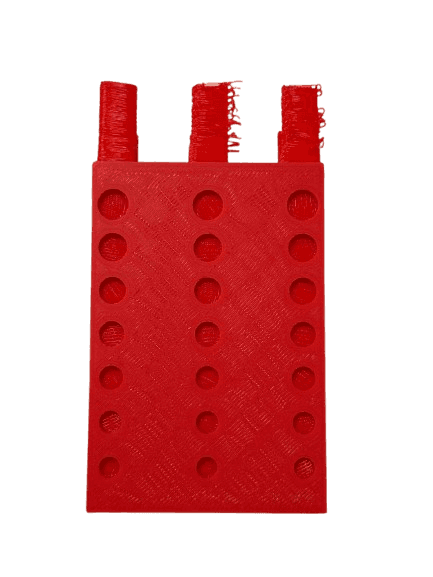
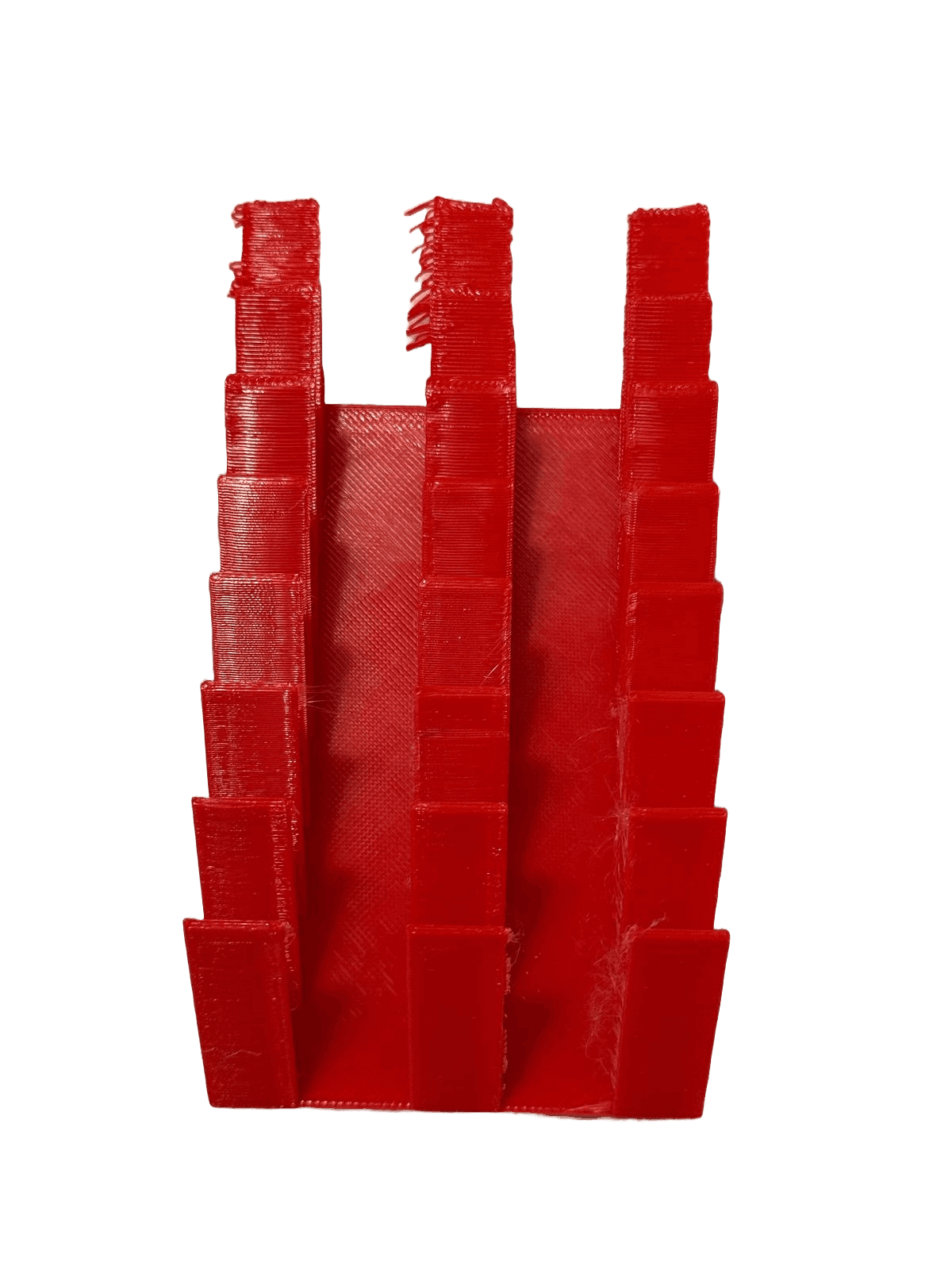

Fig. 3 Due to over Heating
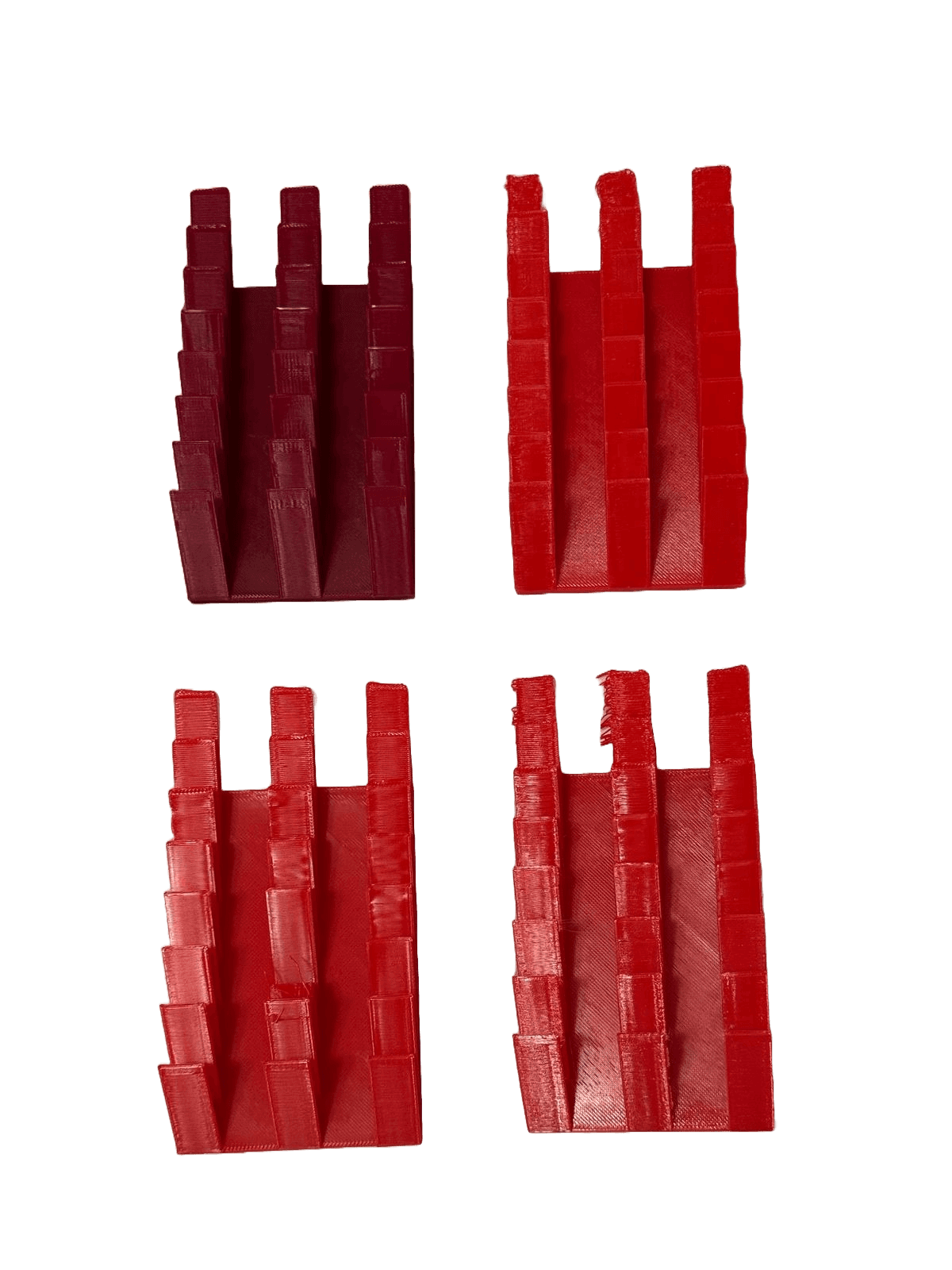
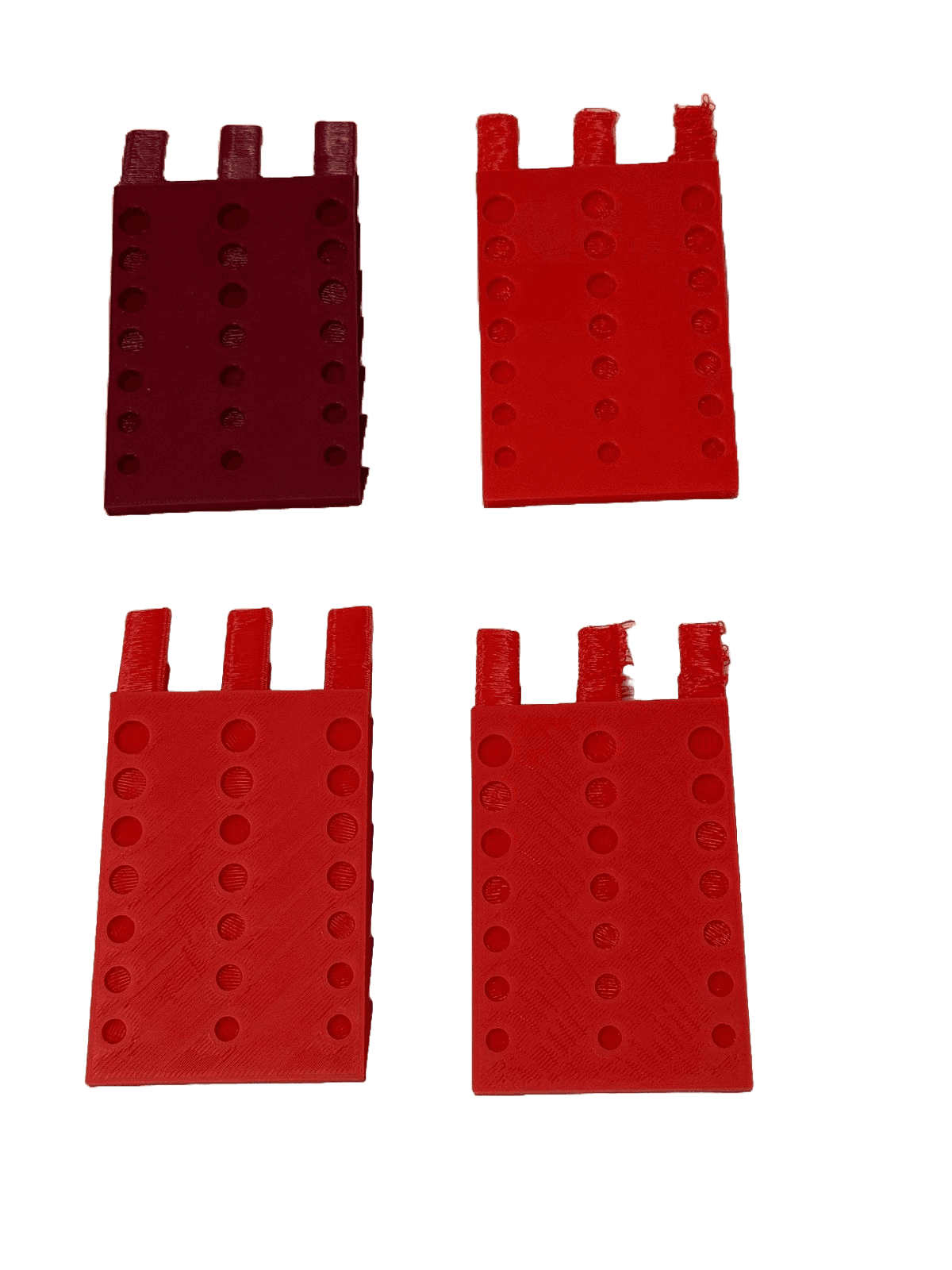
Nozzle Temp 220
Nozzle Temp 270
Bottom View
Top View
Print Speed 100
Print Speed 400
Interpretation:
Statistically Significant Effects:
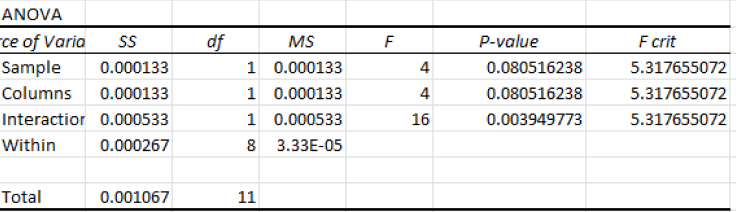
Print Speed and Nozzle Temperature interaction impacted clearance.
Print Speed alone influenced self-supporting angle integrity.
Pass/Fail Consistency:
Clearance failures mostly at lower nozzle temps and higher print speeds.
Angles below 25° consistently failed regardless of parameters.
Main Findings:
Optimal Settings for Clearance: 270°C with 400% speed.
Best Self-Supporting Angle: 30° achieved at higher nozzle temperature.
Design Implications:
Print Speed drastically affects layer adhesion and bridging capability.
Nozzle Temperature improves layer fusion but can lead to stringing if too high.
Limitations & Drawbacks:
High speeds resulted in material stringing.
Limited to PLA, other materials may exhibit different behaviors.
Results
Reflection & Recommendations
Design Enhancements:
Introduce cooling fans for better overhang support.
Implement supports for angles below 30°.
Future Work:
Test with alternative materials (e.g., PETG, ABS) for broader applicability.
Investigate smaller nozzle diameters for precision improvement.
Key Findings:
Minimum Assembly Clearance:
P-Value for Interaction: 0.0039 (Significant interaction between temperature and speed)
Optimal Clearance: 0.32 in at 270°C and 400% speed
Self-Supporting Angle:
P-Value for Print Speed: 0.017 (Significant impact)
Best Performance: Higher nozzle temperature (270°C) with 400% speed maintained angles down to 30°.
Minimum Assembly Clearance
Side View
Self-Supporting Angle
What I expected-
For the clearance holes, I anticipated that the higher nozzle temperature of 270°C would cause excessive melting, leading to poorly defined hole circumferences. Additionally, I expected the lower angle features to droop significantly due to insufficient support during printing.
Analysis
ANOVA Analysis performed using Excel for both DfAM restrictions.
Specimen Summary:
Material: PLA
Printer: Prusa MK4S HF with 0.4 mm nozzle
Replicates Printed: 12 total specimens (3 replicates for each of the 4 combinations)
Measurement Method:
Calipers.
Visual Inspection.

Design Challenge: Opportunistic DfAM
Old Functionality Design Improvements and Justification
Build Analysis
Stability and Performance: The new design was tested with phone vibrations and remained stable. The phone does not fall because the design incorporates a top hook, which secures the phone in place.
The phone slides into the holder smoothly, and the cable management system allows to be neatly wrapped and hooked at the bottom.
The new design includes a dedicated AirPods holder, allowing users to store and charge both their phone and AirPods simultaneously. This ensures both devices are conveniently placed together.
The holder was designed to perfectly fit AirPods without them falling.
Optimized Orientation: The holder is aligned in a straight line, preventing the charging cable from excessive bending, which reduces the risk of wear and breakage over time.
Fig 1. Artifact in use
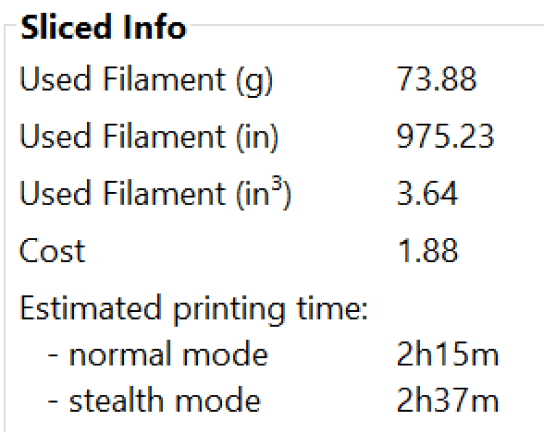
Old Design- Print time & Material
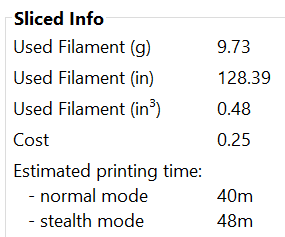
New Design- Print time & Material
87% material reduction → More cost-efficient, Reduced from 74 to 10 gms.
71% reduction, Faster print time → Reduced from 2h 15m to 40m.
No support structures needed → Reduces material waste and post-processing.
The design prints as one piece, eliminating assembly requirements.
No Supports Required: By using restrictive DfAM principles, the design ensures self-supporting angles and avoids unnecessary overhangs.
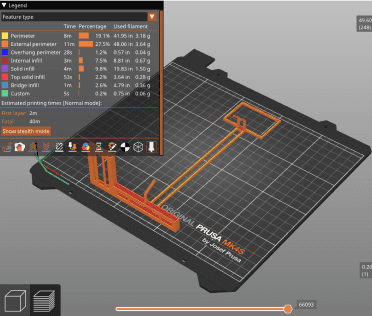
Efficient Build Orientation: The model is positioned flat to minimize material usage and print time while maintaining strength.
Comparison to Old Design: The new design reduces print time and material usage compared to the original while increasing functionality.
Thin Wall Strength: The open-frame structure required precise printing settings to avoid structural weakness.
Overhang Supports: Small bridges for phone holding required fine-tuning to avoid sagging.
Print Orientation: Vertical alignment was chosen to ensure optimal layer adhesion and structural strength.
Warping Risks: Thin sections could warp due to cooling inconsistencies, requiring adjusted print speed and bed adhesion settings.
Processing Challenges During Fabrication:

Application of Free Complexity
Reduced Material Usage: The design minimizes solid bulk surfaces while ensuring structural integrity. Hollow sections and strategic cutouts help to lower material consumption.
Self-Supporting Structure: The hooks are angled above 45 degrees, making them self-supporting and eliminating the need for additional supports during printing.
No Overhangs Beyond Bridging Limits: The design avoids large unsupported spans, ensuring a clean, support-free print.
Reinforced Structure: Some thin sections may be prone to bending or breaking under stress. Adding fillets or slightly increasing thickness in critical areas could enhance durability.
Optimized Geometry: Exploring lattice structures or lightweight reinforcements could reduce weight while maintaining strength.
Improved Cable Management: Adding different hook design or slots for better cable routing could enhance user convenience.
Material Consideration: Testing different materials (e.g., PETG, Nylon) for better strength and flexibility depending on usage scenarios.
The redesign successfully reduces material usage by 87% and 71% reduction in time while maintaining functionality.
Eliminates assembly requirements and support structures, making it more efficient.
New functionalities improve usability, making the product more versatile.
Minor reinforcements can further improve structural integrity, but overall, it is a highly efficient design for AM.
Demonstrates effective use of free complexity, balancing efficiency, functionality, and manufacturability.
Conclusion
Potential Improvements for Future Iterations
Structural Integrity in Extreme Conditions: While the design is stable, additional reinforcement could be needed for overtime usage.
Limited Compatibility: The design fits most standard phone sizes, but future iterations could include adjustable features to accommodate larger devices.
The hooks are thin and can break due to rough use.
Drawbacks of the New Design
Advantages
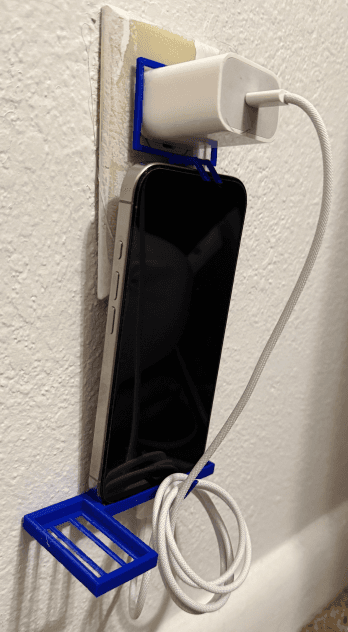
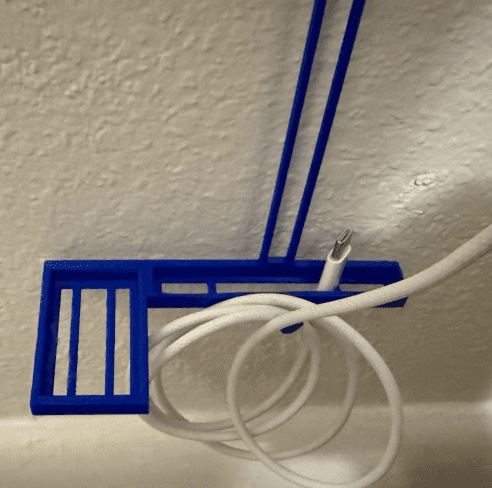
The primary focus was on reducing material usage, improving structural efficiency, and integrating new functionalities while ensuring it remains printable without support structures.
Design Reflection
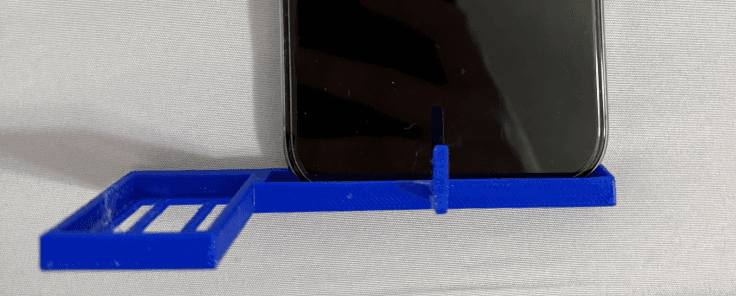
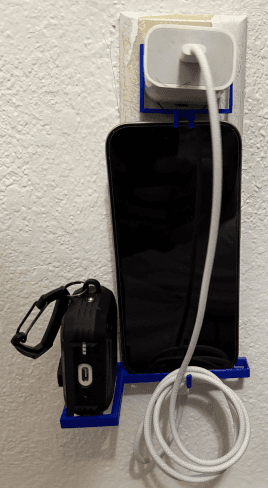
Highly Stable: Tested against vibrations, the phone remains securely in place.
Easy to Use: Users can slide the phone in, plug in the charger, and wrap the cable efficiently.
There is a gap at the bottom to plug the charger in.
Cable Protection: The orientation prevents bending and extends the lifespan of charging cables.
Dual Functionality: The AirPods holder ensures that both devices remain together and can be charged simultaneously.
Balanced Design: The structure is well-balanced, preventing tipping or instability.
Perfect Fit: The phone fits in the gap at the bottom to hold it securely.
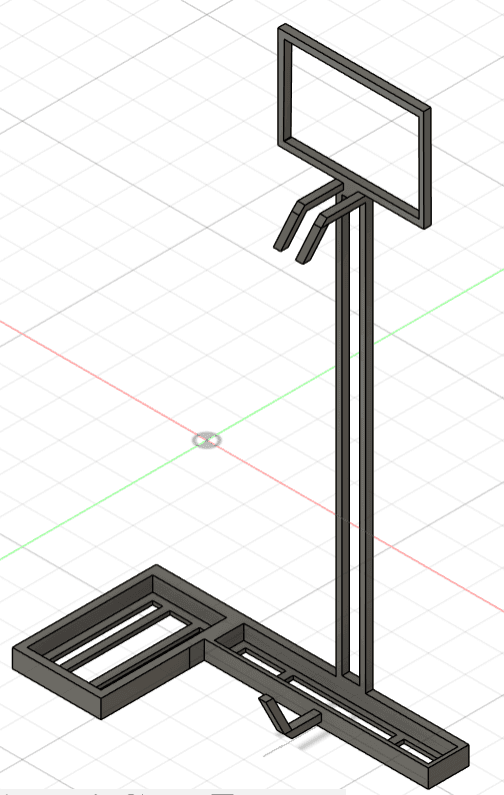
Fig 2. Phone fits in artifact perfectly
Fig 2
Fig 3. Stable and balanced
Fig 3
Fig 4. Hole in artifact to change the phone
Fig 4
CAD Model
Orientation in slicer
Fig 5. Side angle of artifact in use
Design Challenge: Topology Optimization
Intuitive Design
Meets ULA Requirements
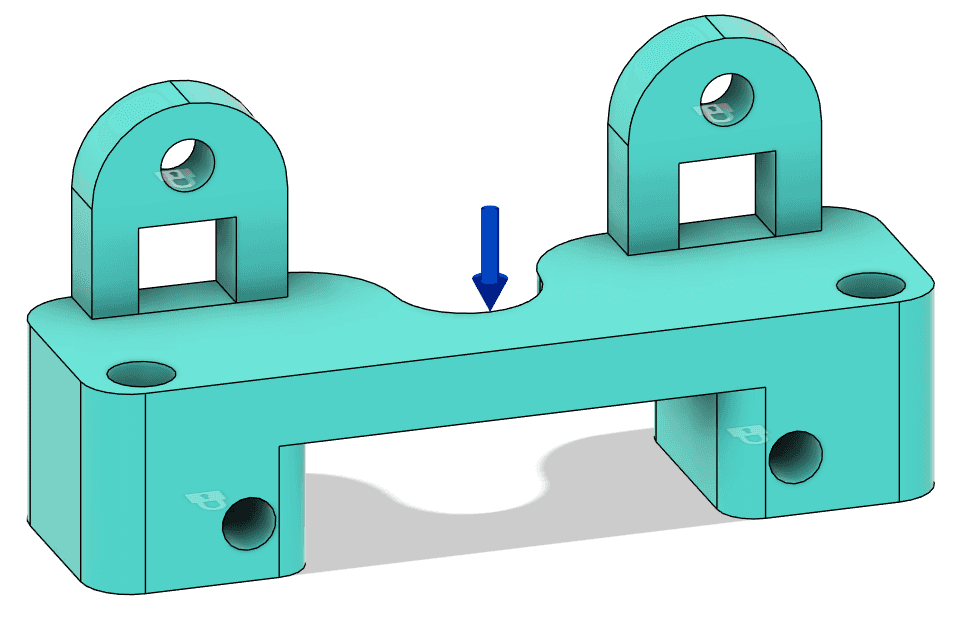
The design supports a 600 lbf central load at the -Z axis on the entire surface with appropriate fixed constraints at mounting holes.
Material selection and loading conditions match ULA’s specifications.
All modifications were performed inside the bounding box of the original bracket as seen in image and the weight was under 0.1 lbs (0.0984 to be exact).
No new protrusions or extensions were added that violate the original design envelope.
Bulk Material Removal Approach Used
Material was removed from low-stress areas based on static stress simulation.
No lattice structures were introduced to maintain simplicity and ease of manufacturing.
The minimum safety factor of 1.35 indicates the design can reliably withstand the applied 600 lbf load with a reasonable margin, ensuring structural integrity.
Topology Optimized Design
Boundary Conditions Correctly Applied
Applied fixed constraints on the mounting hole faces as specified in the original bracket.
Applied a 600 lbf downward load at the -Z axis on the entire surface.
Material Preserved in ULA-Specified Locations
Material around the mounting holes and load application points was preserved to ensure functionality and structural integrity.
The preserve regions were accurately defined during the shape optimization setup in Fusion 360.
Optimization Applied to Original Bracket Design Space
Shape optimization was carried out within the original design volume without expanding the bracket geometry.
Optimization settings targeted a mass ratio of ~10.2%, balancing weight reduction to get weight under 0.1 lbs and performance.
No extraneous geometry or features were introduced, the final form reflects pure topology-driven material efficiency.
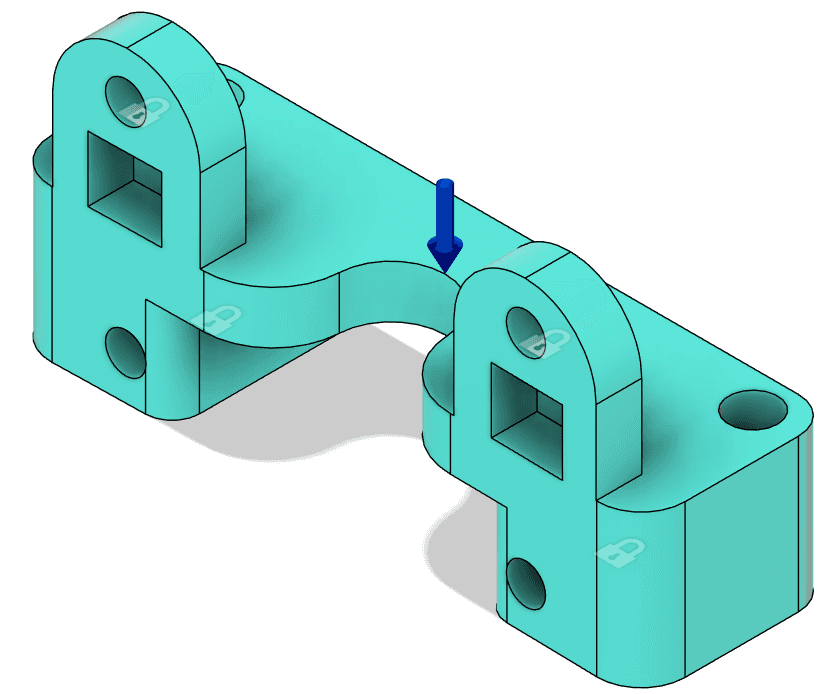
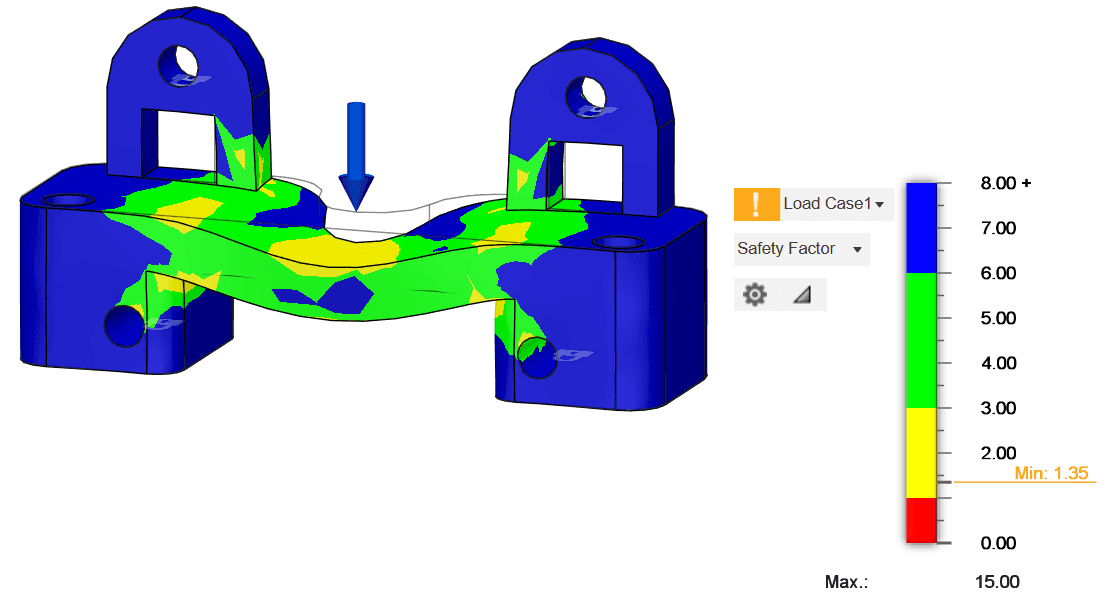
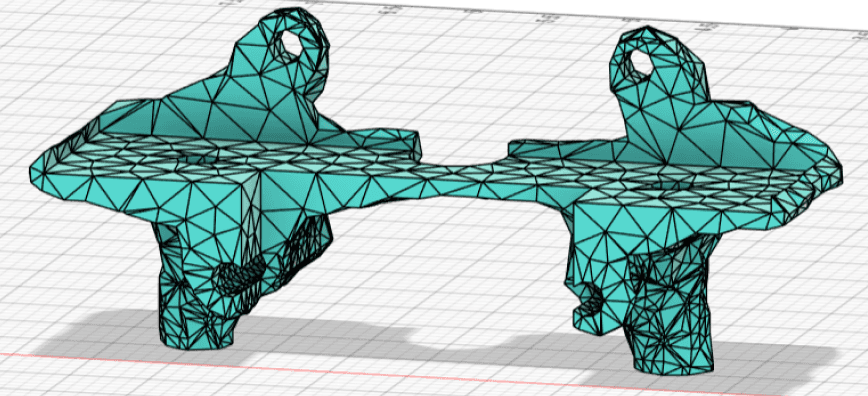
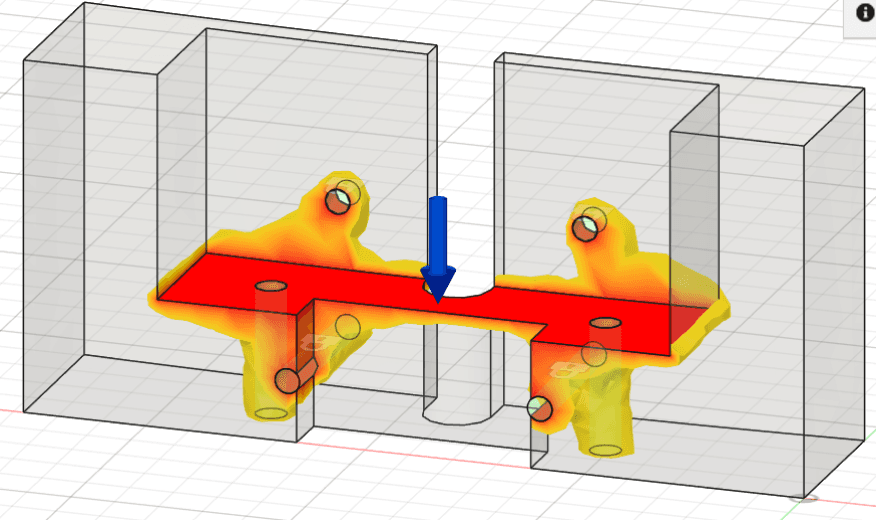
Intuitive Design CAD model and simulation
TopOpt Design CAD model and simulation
Material Usage and Build Time
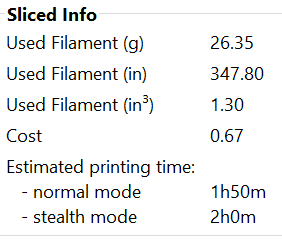
Total filament used: ~26.35 grams
Estimated print time: 1 hour 50 mins (normal mode)
Build Orientation and Process
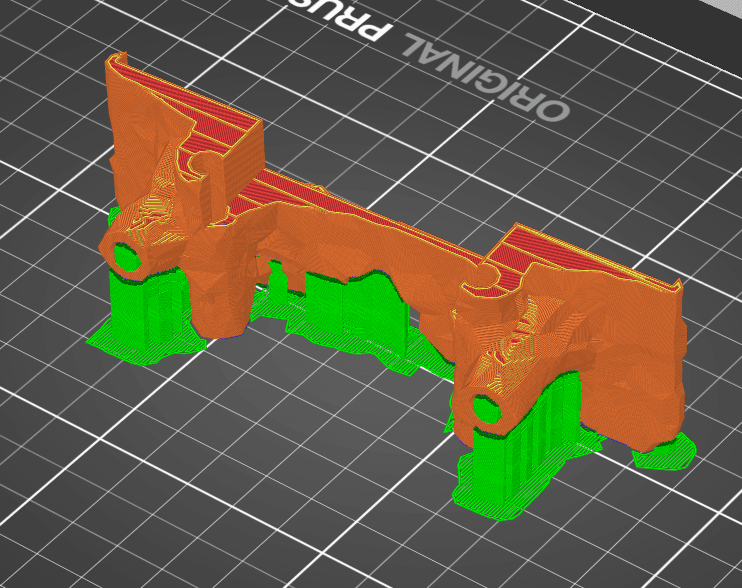
The optimized model was oriented upright from back to minimize reduce print time.
Support structures were applied under overhangs, particularly under inward arches and overcut geometries.
Infill: 15%
Outcome
The final part is lightweight, support-efficient.
Despite some complex geometry, the print was manageable and required minimal post-processing.
Intuitive Design
Intuitive Design was manually modeled to meet ULA needs using conservative bulk removal.
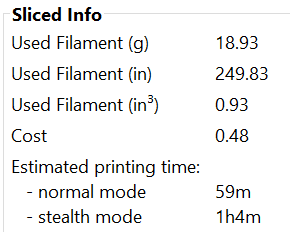
59 mins print time, 18.93g filament.
Minimal supports, simpler geometry.
Intuitive Design Advantages
Simpler geometry makes it easier to model, print, and post-process.
Faster print time (59 mins).
Lower filament usage (18.93g)
More predictable structure for manual design changes.
Intuitive Design Drawbacks
Heavier than necessary – less material-efficient.
Not stress-optimized, may have unnecessary bulk.
TopOpt Design
TopOpt Design was generated using Fusion’s shape optimization based on applied load and constraints.
1h50m print time, 26.35g filament.
Higher support material due to complex form.
TopOpt Design Advantages
Lightweight and material-efficient.
Stress-optimized with higher structural performance.
Ideal for advanced applications
TopOpt Design Drawbacks
Longer print time with higher cost.
Requires more support and post-processing.
Less visually clean and harder to manufacture.
Design Reflection
Manufacturability Analysis of Topology Optimized Design
Material Usage and Build Time
Total filament used: ~18.93 grams
Estimated print time: 1 hour (normal mode)
Build Orientation and Process
The model was oriented flat on its back for optimal bed adhesion and minimal support.
Supports were generated only where necessary (primarily under small overhangs) to reduce waste and post-processing.
Infill: 15%
Outcome
The part is easily printable with standard PLA settings.
The shape ensures strong base contact, minimal warping, and manageable support removal.
Manufacturability Analysis of Intuitive Design
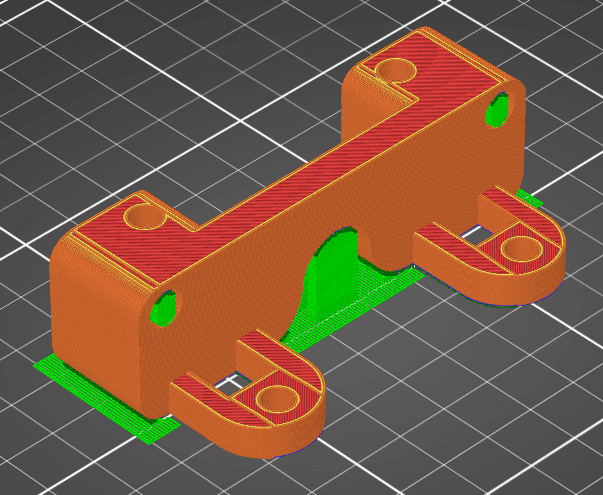
Embedding Flexibility in PLA through Geometry
Introduction and Newly Identified Knowledge
This case study explores geometric flexibility in additive manufacturing (AM) by testing how print-in-place strategies using rigid PLA can mimic flexible behavior. Rather than using soft materials, the project applies mechanical compliance through design elements like living hinges, accordion folds, and lattice geometries, which allow rigid prints to bend and return to shape.
According to Jayswal and Adanur (2022), flexibility in AM can be achieved by manipulating geometry to introduce compliant deformation paths, especially in structures inspired by fabrics, meshes, and folds. Velasco-Hogan et al. (2018) further support this idea, showing how bioinspired structures like hexagonal lattices enhance flexibility while noting the need to optimize for stress concentration zones during deformation. Similarly, Keefe et al. (2022) in their review of textile AM, emphasize that layered FDM techniques can create knitted, interlocked, or woven patterns using rigid polymers to simulate fabric-like motion.
To ensure consistent testing and fair comparison, process parameters like layer height (0.2 mm), flat-bed orientation, and low infill (5%) were standardized. Through this literature synthesis, the project identified a clear knowledge gap: while many studies demonstrate methods for inducing flexibility in rigid materials, few quantitatively compare them side-by-side under the same material and process constraints. This study fills that gap by evaluating five such geometry-driven strategies, measuring their deflection numerically, and comparing them in terms of print quality, deformation range, and failure thresholds.
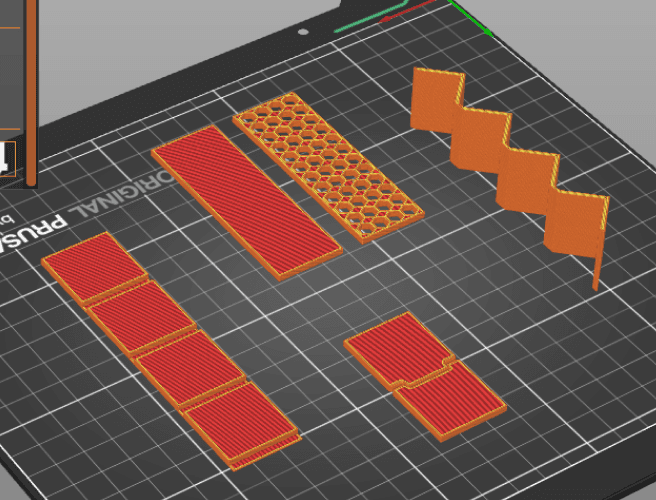
Print orientation of geometric designs
Developed Technique and Design Strategy
To develop geometric flexibility in PLA using additive manufacturing, it was established a unified design approach: "Print-in-Place Mechanical Articulation." This technique integrates compliant geometry, print orientation, and tolerance tuning to enable flexible motion in otherwise rigid materials. Rather than relying on elasticity, the method focuses on enabling movement through controlled mechanical articulation embedded directly into the geometry, printed without post-assembly.
Core Elements of the Technique:
Geometry-Driven Compliance:
Inspired by research on compliant mechanisms and articulated joints, five small-scale test units were designed based on different articulation strategies:
Living hinges
Accordion folds
Interlocked hinges
Hexagonal lattices
Flat bars
These geometries emulate flexibility through shape rather than material elasticity, as supported by Arikan & Doğan (2023), who showed how textile-inspired prints can “mimic deformability via curvature and gaps.”
Print-in-Place Tolerance Tuning:
Based on Dew et al. (2016) and Frohn-Sörensen et al. (2023), a clearance of 0.4–0.5 mm
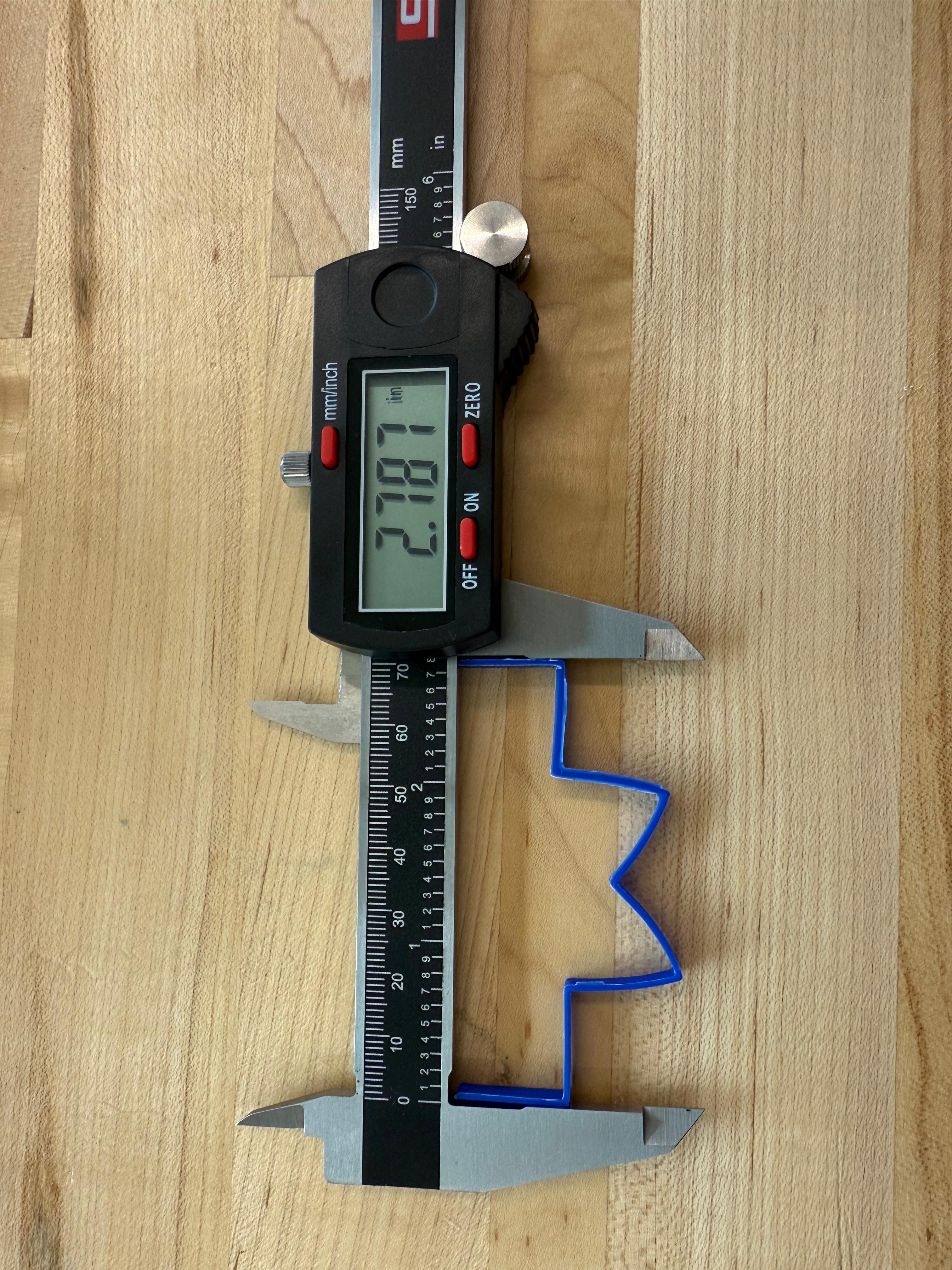
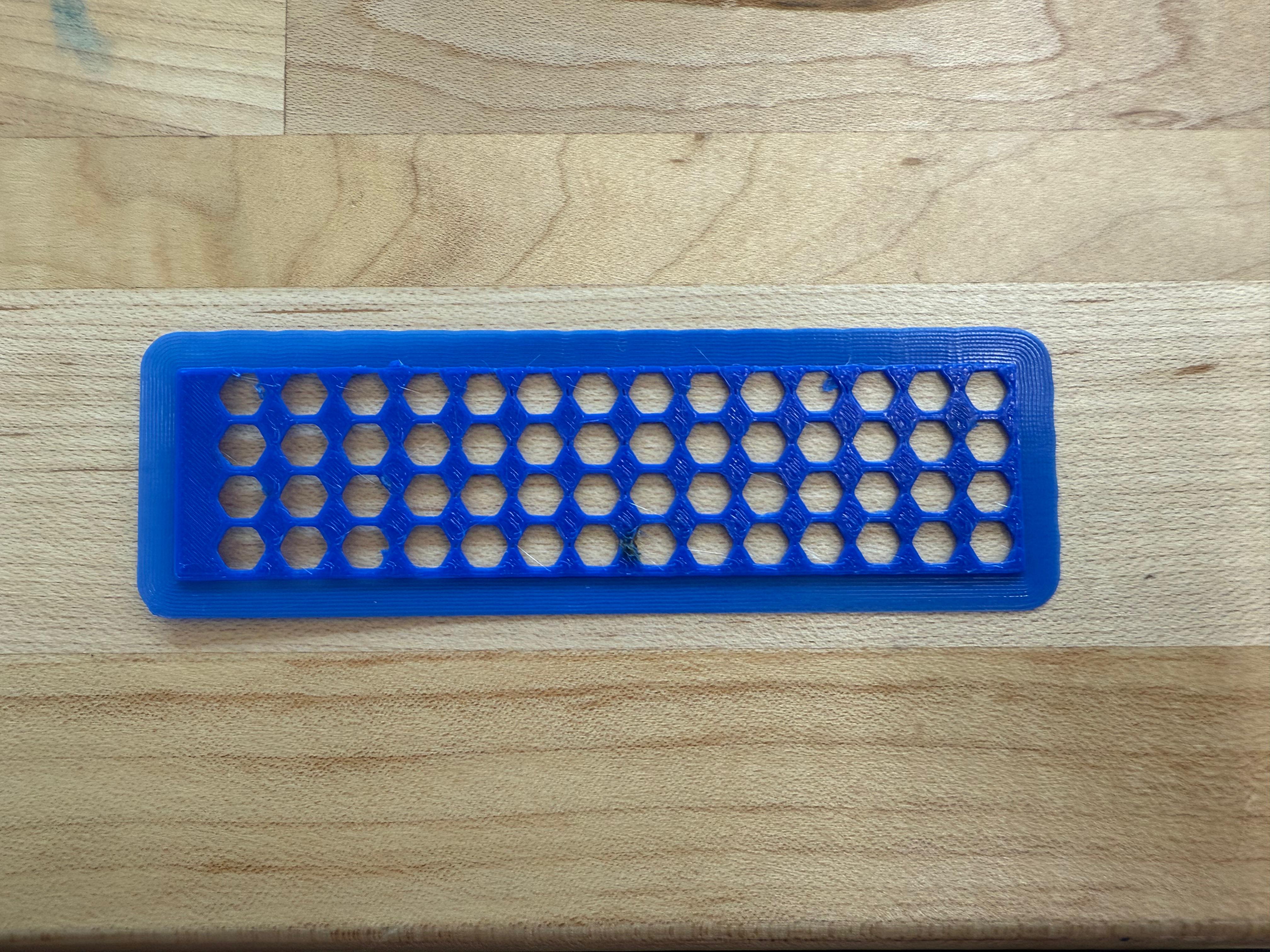
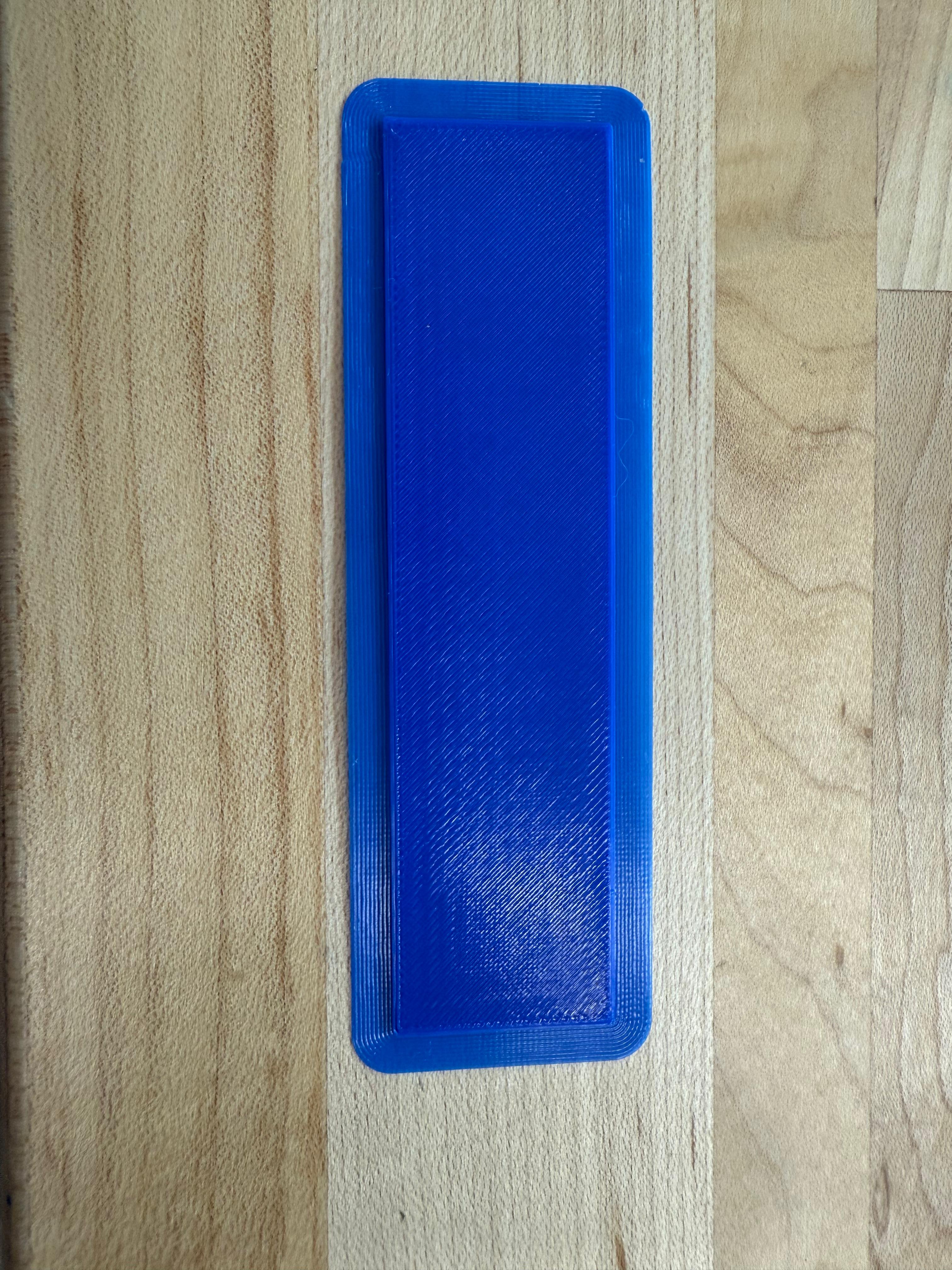
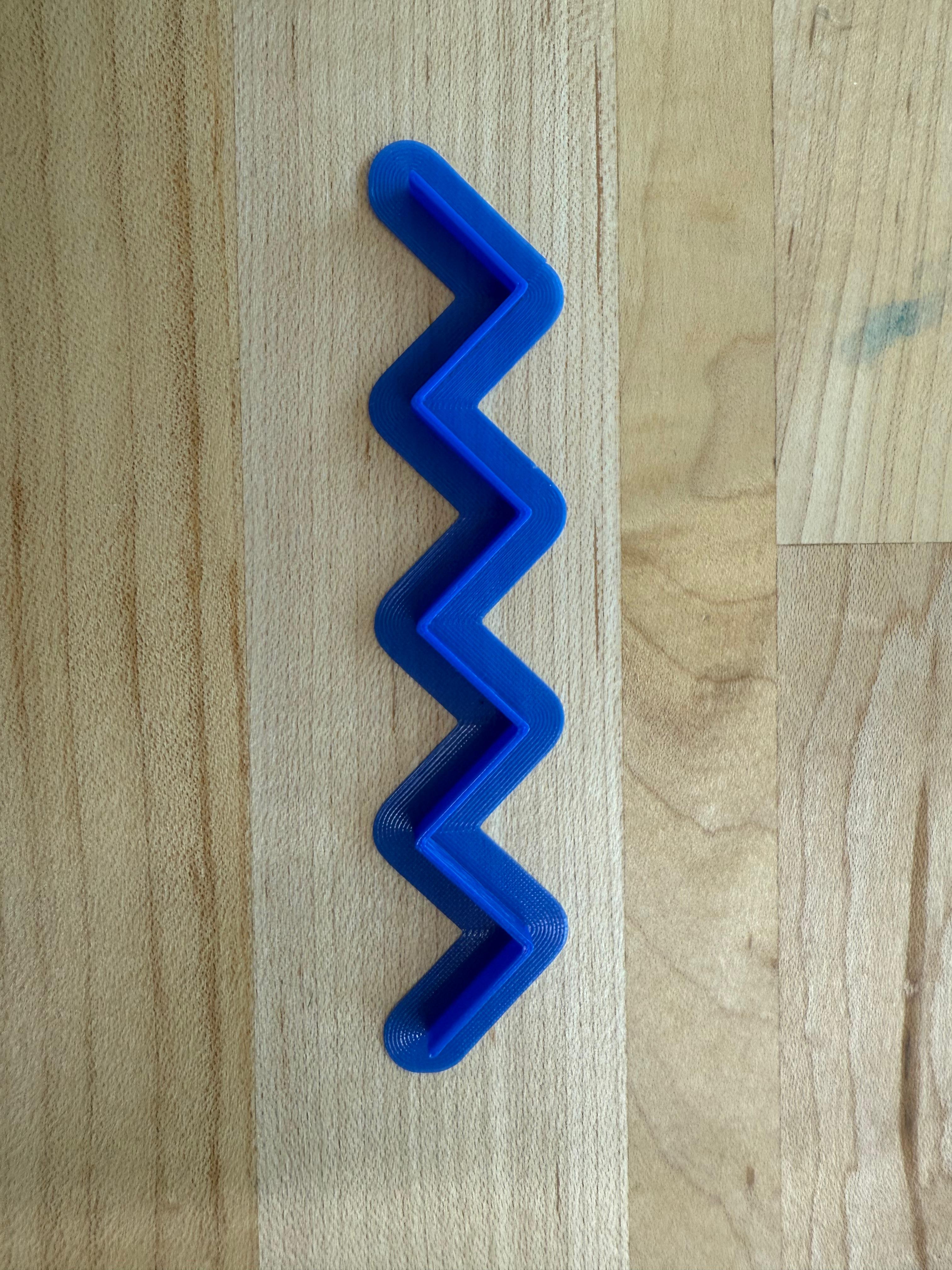
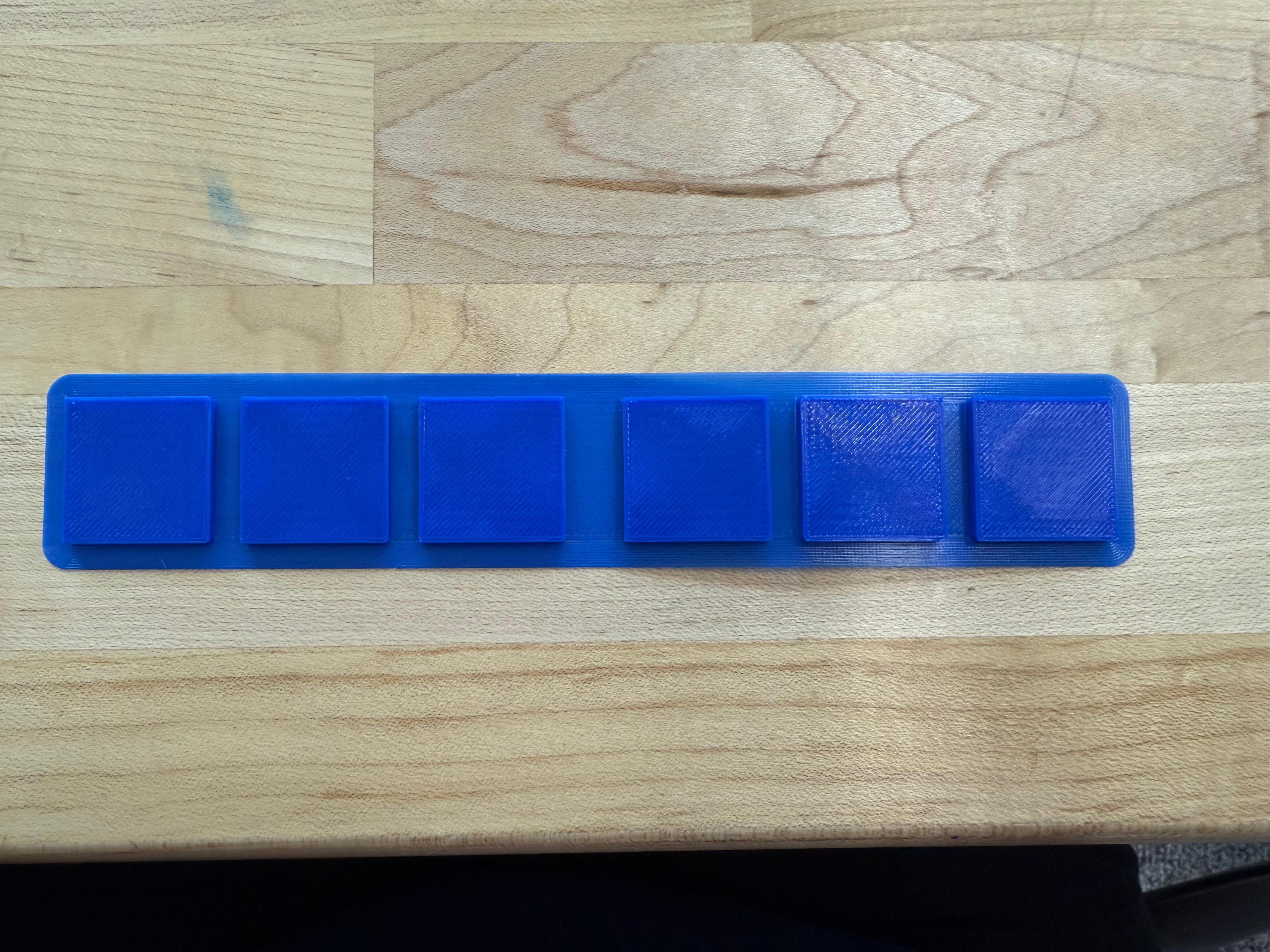
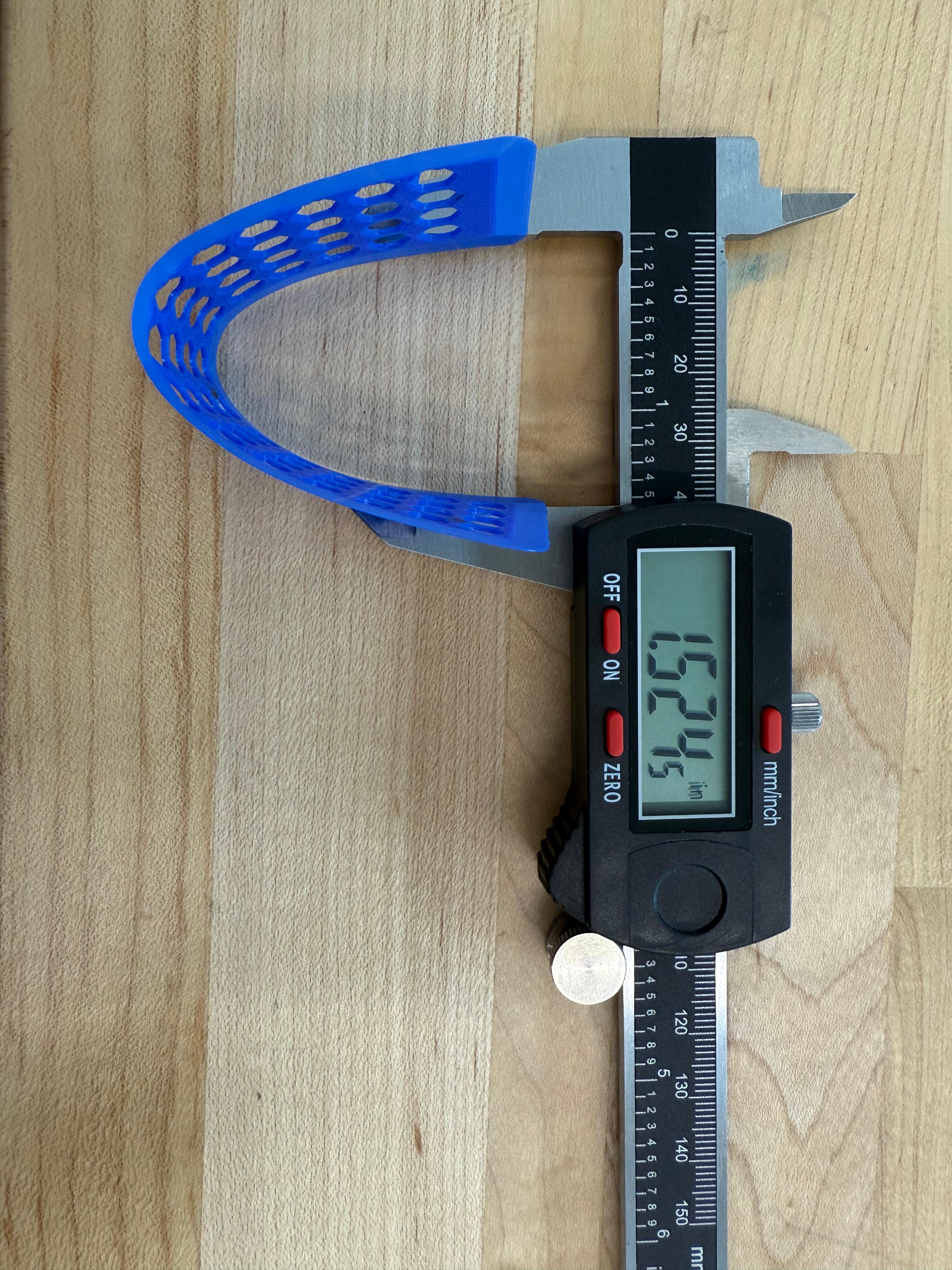
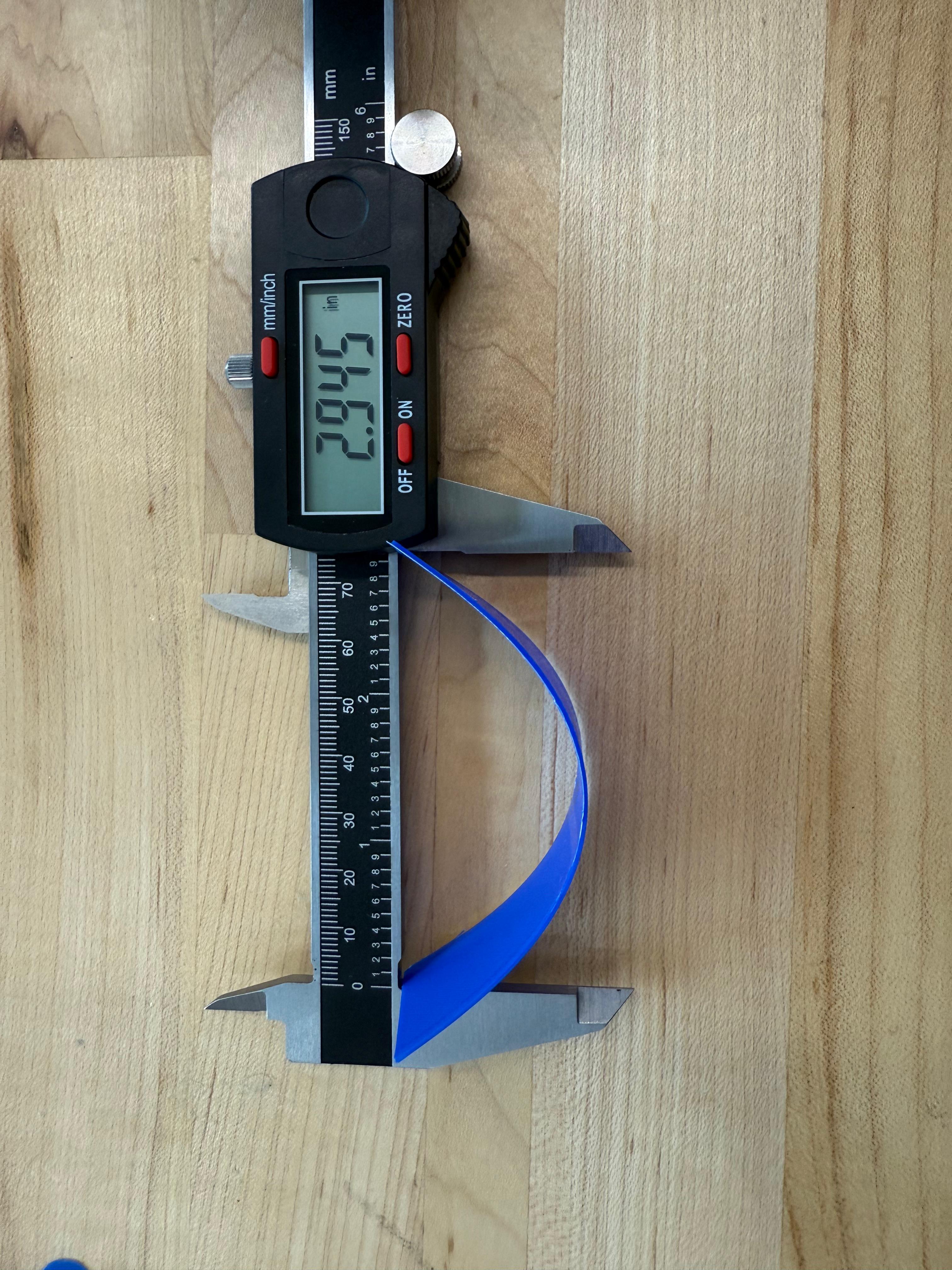
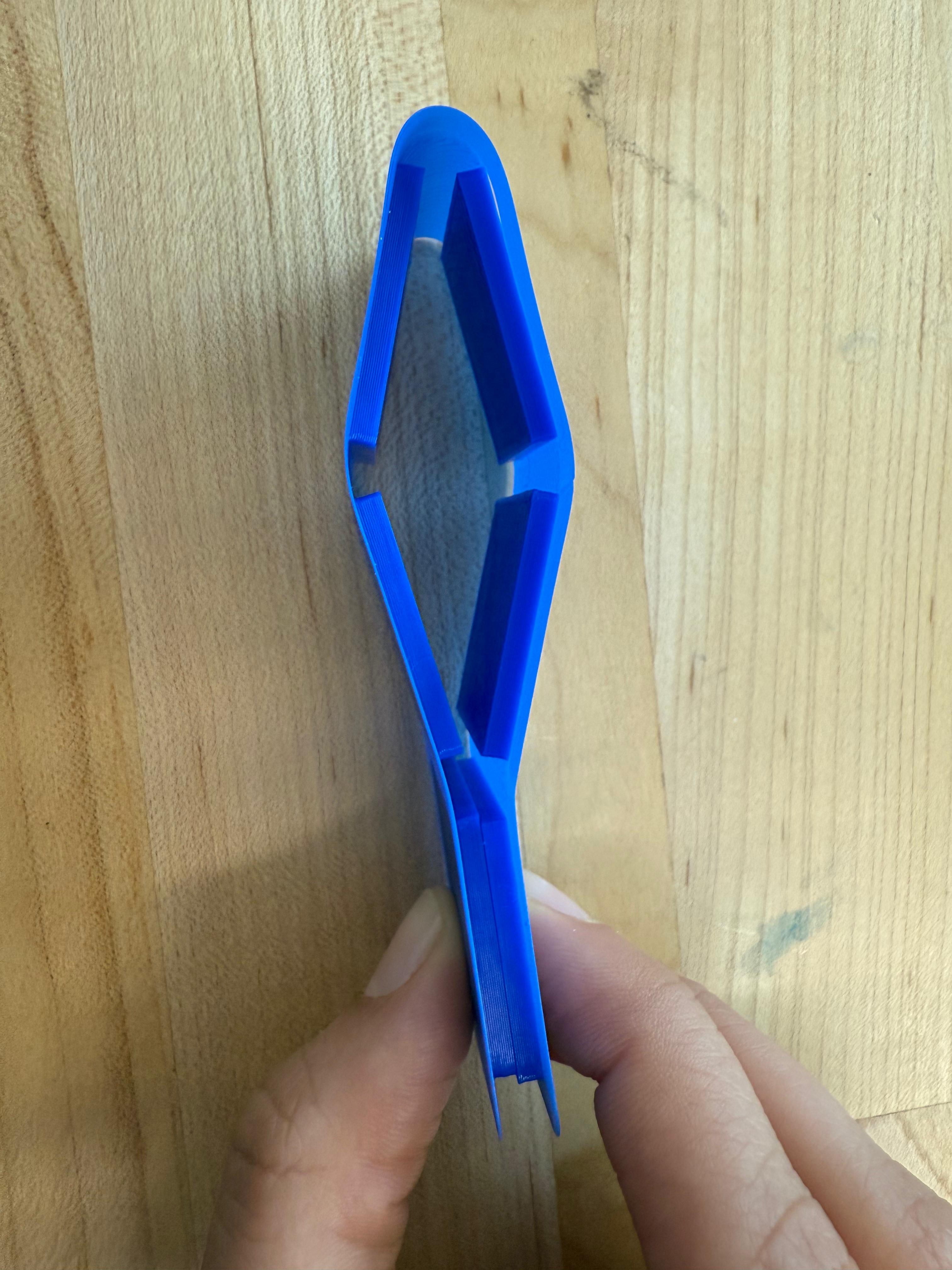
Zigzag Accordion
Living Hinge
Lattice
Interlocking Hinges
Rigid Bar
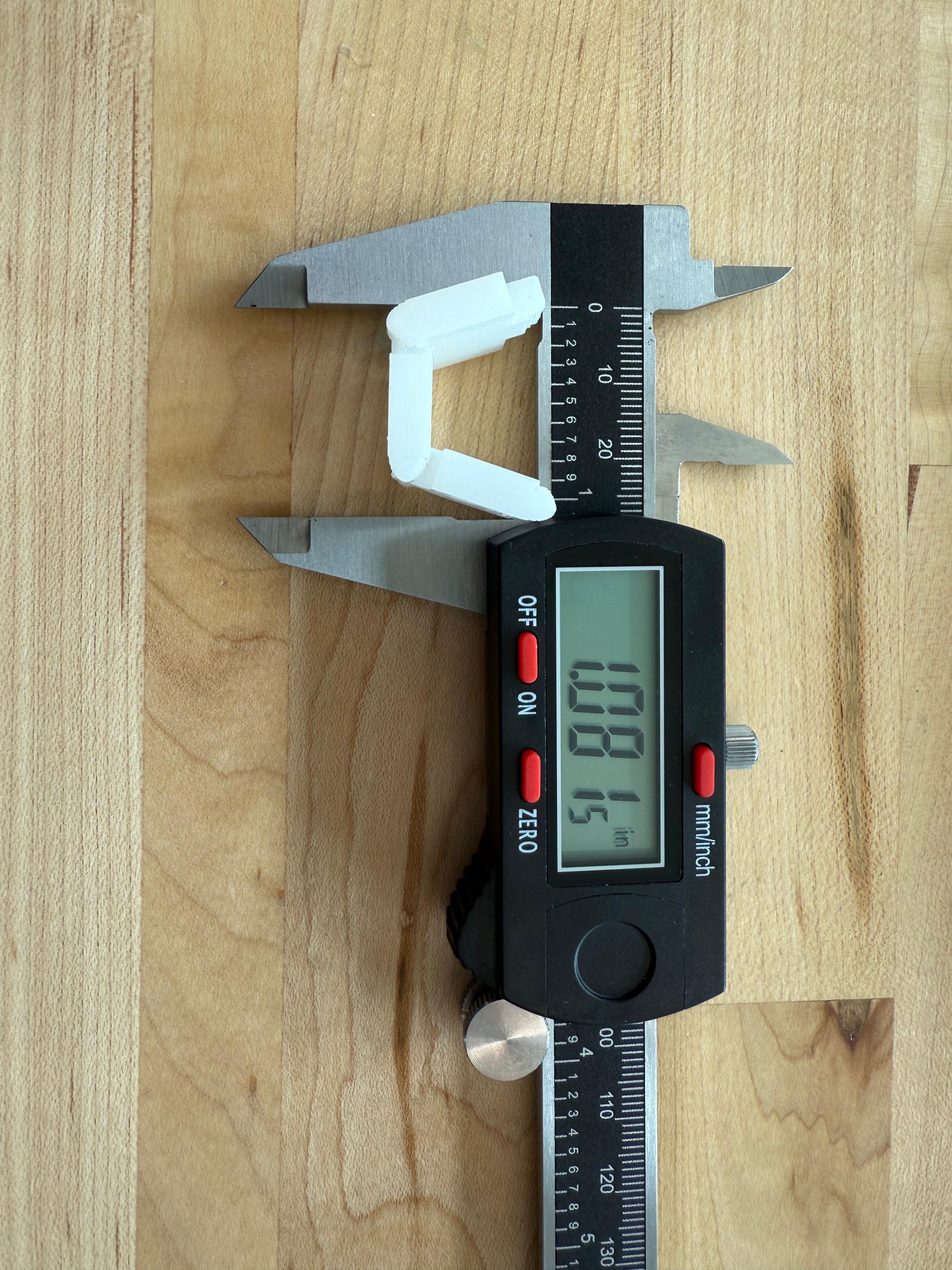
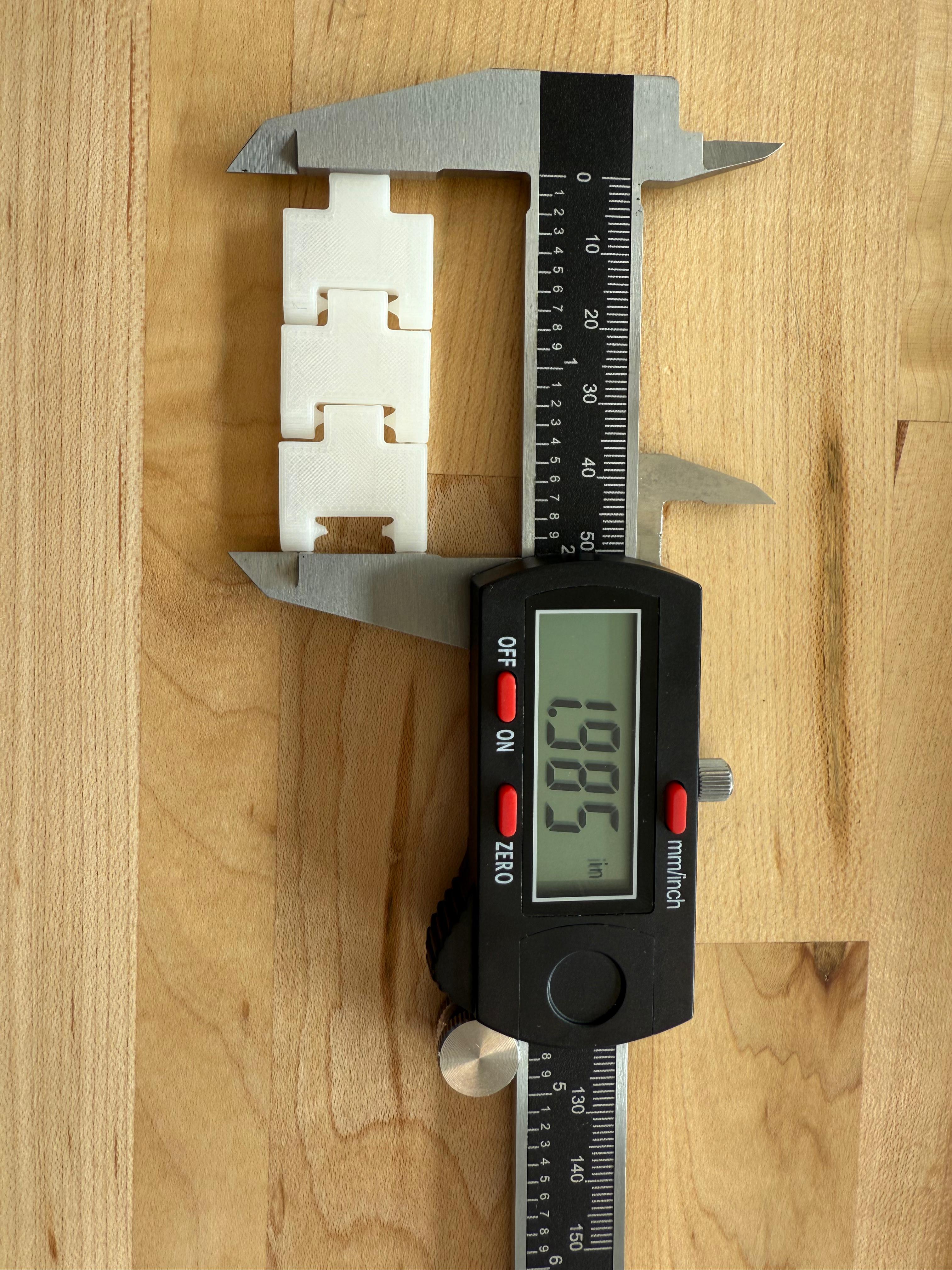
The image set provides a comparative visual overview of five different geometric design strategies implemented in rigid PLA to test and demonstrate geometric flexibility through structural engineering rather than material changes.
Images of Geometric Designs with Deflection
between interlocking elements was implemented to ensure movement post-printing while maintaining structural cohesion. This required careful calibration in Fusion360 and slicing software to balance independence of parts.
Flat Orientation for Printability:
To minimize support requirements and improve mechanical behavior, all parts were oriented flat on the bed with a layer height of 0.2 mm and printed in PLA using an FDM printer. This approach was informed by Khan et al. (2024), who noted that “orientation and layer adhesion critically affect part strength and flexibility” in FDM prints.
Iterative Print-Test-Refine Loop:
After the initial designs were printed, deflection and breakage behavior were analyzed. Models were tested by bending until failure or target shape was achieved. Each iteration informed the next with respect to hinge dimensions, fold spacing, or lattice density.
Each geometry is shown both in its resting state and under deflection, highlighting how form alone can enable motion and compliance in PLA prints. This visual summary supports the study's goal of evaluating design-driven flexibility in additive manufacturing.
Zigzag Accordion
Living Hinge
Lattice
Interlocking Hinges
Rigid Bar
The image set provides a comparative visual overview of five different geometric design strategies implemented in rigid PLA to test and demonstrate geometric flexibility through structural engineering rather than material changes.
Images of Geometric Designs with Deflection
between interlocking elements was implemented to ensure movement post-printing while maintaining structural cohesion. This required careful calibration in Fusion360 and slicing software to balance independence of parts.
Flat Orientation for Printability:
To minimize support requirements and improve mechanical behavior, all parts were oriented flat on the bed with a layer height of 0.2 mm and printed in PLA using an FDM printer. This approach was informed by Khan et al. (2024), who noted that “orientation and layer adhesion critically affect part strength and flexibility” in FDM prints.
Iterative Print-Test-Refine Loop:
After the initial designs were printed, deflection and breakage behavior were analyzed. Models were tested by bending until failure or target shape was achieved. Each iteration informed the next with respect to hinge dimensions, fold spacing, or lattice density.
Each geometry is shown both in its resting state and under deflection, highlighting how form alone can enable motion and compliance in PLA prints. This visual summary supports the study's goal of evaluating design-driven flexibility in additive manufacturing.
[1] Dew, K., Mizrahi, M., Golan, A., Gruber, R., Lachnise, A. Z., & Zoran, A. (2016). Producing printability, articulation work and alignment in 3D printing. Proceedings of the 19th ACM Conference on Computer-Supported Cooperative Work & Social Computing.
[2] Frohn-Sörensen, P., Mouratidis, M., & Engel, B. (2023). Design of non-assembly joints incorporating randomness generated through a publicly accessible 3D print farm.
[3] Arikan, C. O., & Doğan, S. (2023). Geometric structures in textile design made with 3D printing.
[4] Dash, S. (2023). Design of flexible lattice structures: A design for additive manufacturing perspective (Licentiate thesis, Lund University).
[5] Khan, Z., Straubinger, D., Azeez, A., et al. (2024). Iterative printing of bulk metal and polymer for additive manufacturing of multi-layer electronic circuits. Advanced Manufacturing.
[6] Parupelli, S. K., & Soni, S. K. (2019). A comprehensive review of additive manufacturing (3D printing): Processes, applications and future potential. American Journal of Applied Sciences.
References
Future iterations will explore refined tolerances and varied geometric configurations, such as adjusting hinge clearances and lattice densities, to improve functional articulation in PLA. The articulated link strategy developed here may be expanded into a complete wearable form, such as a flexible PLA watch strap.
This case study has laid a strong foundation for continued growth as a designer by highlighting how research-informed design decisions, paired with measurable testing methods, lead to more intentional and innovative AM solutions.
Future Work
Through this design challenge, I gained hands-on insight into how geometry fundamentally influences flexibility in additively manufactured PLA components. What began as a conceptual goal, enhancing geometric flexibility, evolved into a rigorous exploration through prototyping, testing, and measurement. I designed and printed five unique models: zigzag accordion, living hinge, lattice panel, rigid bar, and interlocking hinges. Each demonstrated how different strategies perform under deflection and helped me quantify their behavior using digital calipers and percentage-based deflection analysis.
One of the key realizations was that even small geometric changes, such as slot patterns, curve continuity, or the number of joints, can lead to drastically different performance outcomes. The living hinge achieved 100% deflection, which validated the effectiveness of thin sections for flexibility. On the other hand, the rigid bar, with minimal geometric tuning, behaved as expected with low deflection. This contrast reinforced the importance of design intent and mechanical logic in additive manufacturing.
Moreover, I learned the importance of design for testability, ensuring printed parts could be measured under consistent conditions. This was crucial for fair comparison and emphasized the value of planning test protocols early in the design process. The experience also deepened my understanding of how to balance form and function, especially when multiple flexibility mechanisms need to be evaluated side by side.
Ultimately, this project helped me master practical applications of design strategies discussed in literature and inspired confidence in applying analytical evaluation techniques to future design problems.
Reflection and Mastery